Lampedusa Focus Group – March 2026
The Cala Pisana cemetery can be seen as a complex place, where family memory, a sense of community and the dynamics of migration in the Mediterranean intertwine.
The cemetery as a public space of collective memory
The chapels and family tombs transform the cemetery into a very ‘genealogical architecture’: the space is not merely shared for purely functional reasons. It represents a relational co-presence in where family ties are kept intact; the cemetery is part of a continuum linking memories associated with the village’s families.
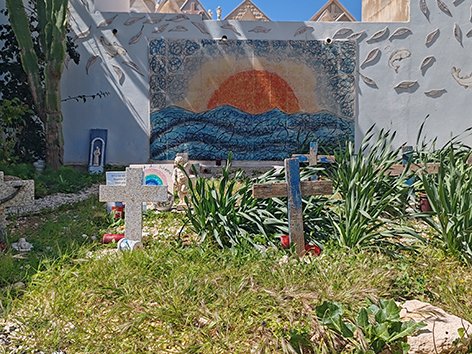
Presence of Migrants and the Sharing of Funeral Space
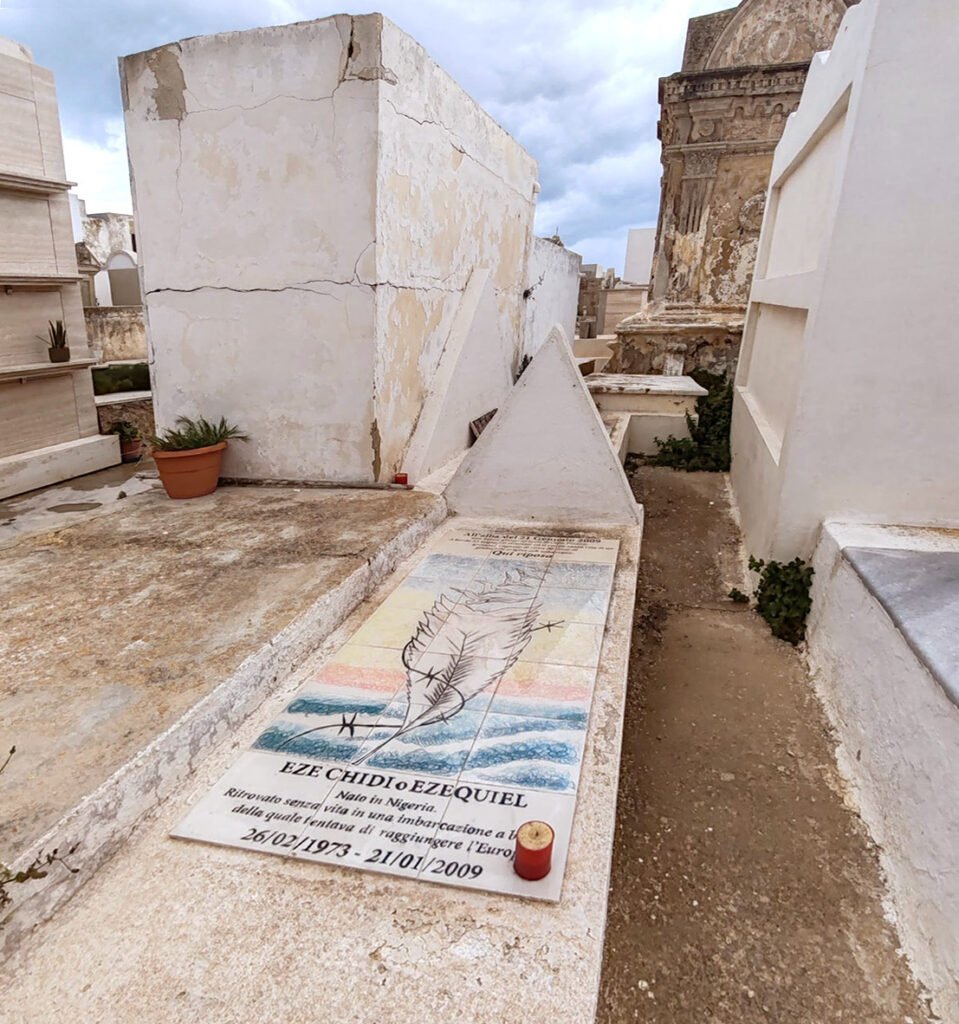
One of the key themes is the burial of migrants who died whilst crossing the Mediterranean. As long as there was space available, the bodies were buried alongside local deceased. As long as there was space available, the bodies were buried alongside local deceased. Eyewitness accounts reveal a form of funerary equality based on a pragmatic and moral principle: anyone who dies deserves a dignified burial, regardless of their origin or identity. As such, the small cemetery dedicated to migrants has gradually become a place of collective memory, developed through a community initiative rather than institutional planning.
The crisis affecting cemetery space and forms of civil disobedience
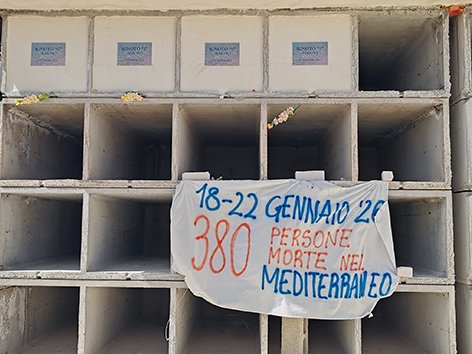
Its peripheral location and lack of maintenance reinforce the cemetery’s image as a marginal space. The shortage of available space and the inaccessibility of the new cemetery have given rise to tensions. The unmarked graves in the new cemetery can be interpreted as a kind of spatial disobedience of the burial tradition that emerges when the institutional system can no longer sustain the pressure of reality.
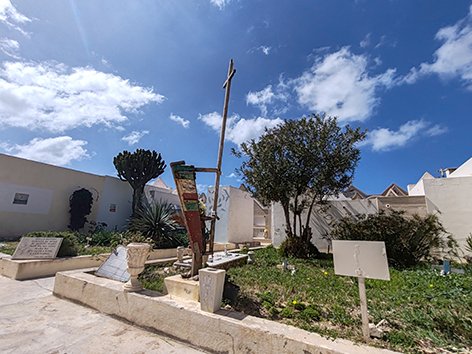
Death, identity and ritual adaptation
One of the difficulties in managing the burials of migrants is often the lack of information regarding the identity of the deceased. In this context, the Catholic rite continues to be the predominant practice, but it is adapted to the circumstances. Even accounts of the placing of crosses on graves show how this ritual gesture is interpreted primarily as a minimal form of human recognition and the restoration of dignity, rather than as a religious affirmation.
Fragile memory and the invisibility of migrants who have died in the sea: towards a new meaning for the cemetery
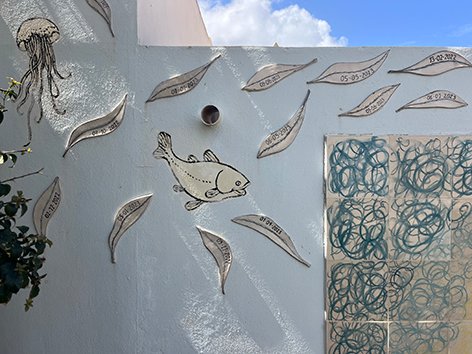
If the memory of local deceased is sustained by family networks and consolidated practices of commemoration, migrants' memory appears more vulnerable and sporadic. The burial ground in the old cemetery and the sea itself constitute the main sites of remembrance, but there is a lack of stable mechanisms capable of integrating these deaths into a shared public narrative. The memory of migrants therefore remains largely entrusted to local and occasional initiatives. From this perspective, it is as though the cemetery needs to become a place able not only of housing burials, but also of making the presence of migrants who have died at sea recognisable and narrable, thereby helping to redefine the relationship between memory, ritual, inclusion and human dignity.