
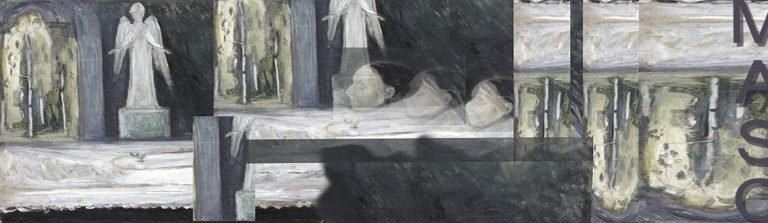
MAking Space for the Other_ An interdisciplinary research group
Although operating within a philosophical framework, the project adopts an interdisciplinary approach. Philosophy has primarily considered death from a temporal perspective; however, this project is based on the premise that a reflection on the category of space influences the temporal one and helps to conceive of death in concrete rather than abstract terms. So that «time may also be read in space» (Schlögel), the project combines philosophical and architectural research. The architectural framework allows for interweaving aesthetic, cultural and practical considerations. Through an interpretation of space, developed by analysing several case studies, the project presents cemeteries as a complex coexistence of the dead and the living, different cultural and religious traditions, representations and forms of worship. It demonstrates a rethinking of the very nature of public space, freeing it from the univocity of ‘homo technologicus’ and opening it up to the anthropological complexity of human existence. Cemeteries concern all human beings, but in different ways; they are highly paradoxical places – situated between life and death, the private and the public, differences and commonalities, the natural and the cultural, the past and the future – and thus offer a complex perspective that is highly generative for thought and innovative for social practices. Consequently, the project highlights cemeteries as structures that help to uncover the conditions of possibility for creating more inclusive, equitable and sustainable societies.
Carla Danani
Principal Investigator
Macerata University of Studies
Department of Humanities
Mariateresa Giammetti
Federico II University of Studies
Department of Architecture
Iolanda Poma
Piemonte Orientale University
Department of Humanities
Sergio Labate
Macerata University of Studies
Department of Educational Sciences
Luca Ghisleri
Piemonte Orientale University
Department of Humanities
Michele Cardinali
Macerata University of Studies
Department of Humanities
Silvia Pierosara
Macerata University of Studies
Department of Humanities
Valerio Agliotti
Piemonte Orientale University
Department of Humanities